
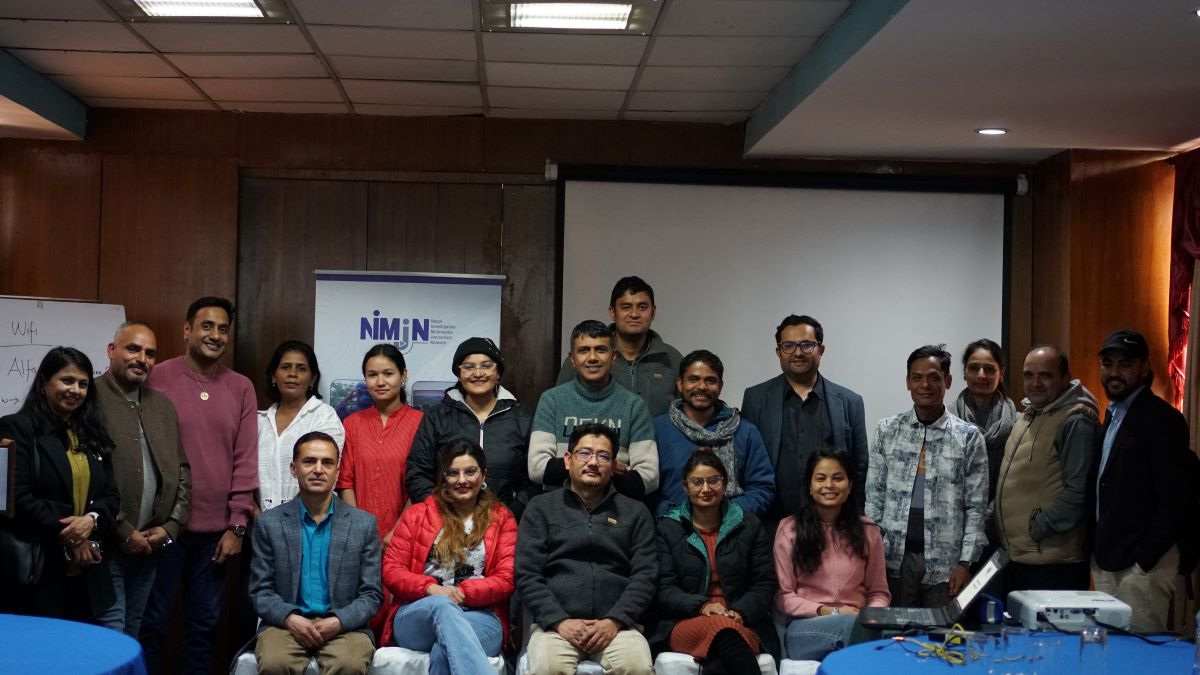
Nepal Investigative Multimedia Journalism Network (NIMJN) hosted a five-day intensive residency at the Bhaktapur Guest House from February 7 to 11, 2026. This program brought together 16 journalists from across Nepal to bridge the gap between technical data mastery and human-centric reporting.
The residency focused on providing journalists with a sophisticated digital toolkit through a curriculum that moved beyond theory into deep technical production. Participants explored the complexities of AI accountability and algorithmic bias while receiving hands-on training in Open Source Intelligence (OSINT) to track digital footprints and verify online data. The technical sessions also covered geospatial reporting, where journalists learned to utilize satellite imagery to provide indisputable geographic proof for environmental and social investigations. Furthermore, a deep dive into the regional cyber scam landscape unmasked the dark intersection of human trafficking and digital forced labor.
Technology is most impactful when it serves as a voice for the marginalized, and a core pillar of the residency was dedicated to inclusion and diversity. The training emphasized reporting on structural inequalities, addressing the systemic challenges faced by various communities, including issues related to caste, gender, and public health. These sessions reminded participants that behind every dataset is a human face and a story that demands justice. To ensure these stories reach their full potential, the curriculum integrated multimedia storytelling techniques, including video editing and specialized scripting for social platforms to maximize audience engagement.
Investigative journalism often requires a collective effort to address complex, systemic issues. Throughout the five days, masterclasses on the importance of collaboration set the stage for fellows to transition into cross-border and cross-newsroom partnerships. Recognizing the risks associated with high-stakes reporting, the residency also included comprehensive briefings on safety and risk assessment. Insights into the evolving landscape of organized crime ensured that journalists are equipped with the safety protocols necessary to navigate sensitive investigations.
Moving forward, these journalists will continue to work on collaborative investigations.
-1779985462.jpg)


Comments